
Sheru Bhai's rules about money (none of them are about getting rich quick)
Eleven habits from a fisherman's son who learned the price of a dirham before he learned anything else.
Sheru Bhai's rules about money are eleven plain habits from his life: keep one thing you will never spend, send Amma her share first, write every dirham down, walk when you can walk, never borrow to look rich, and pay every debt, money or kindness. None of them is a shortcut. They are slow and a bit dull, and they are how a fisherman's son from Neendakara stopped dreading the first of the month.
He never read any of them in a book. Each one cost him something before he understood it, so each rule below starts with the scene from the Sheru Bhai story where he paid for it.
These are a fictional character's habits from a story, not financial advice.
1. Keep one thing you will never spend
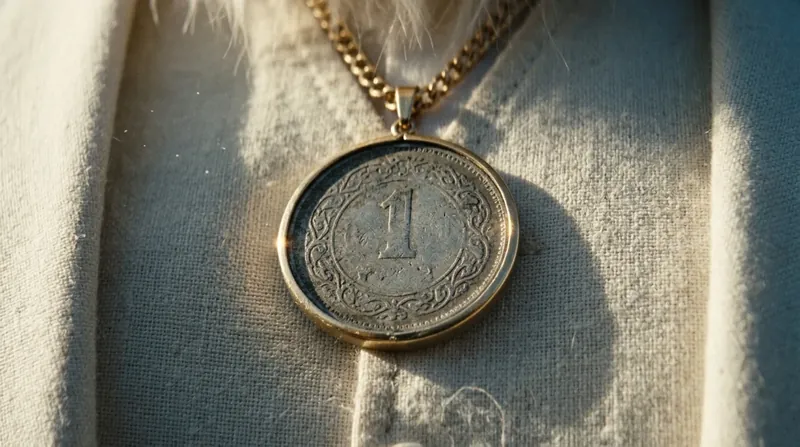
It is 1994, a grey monsoon morning. Before he pushes the boat out, Achan presses a one-rupee coin into his eight-year-old son's paw. "Ithu vecho mone... Achan varumbo namukku mittaayi vaangaam." Keep this, son. When Achan comes back, we'll buy sweets. A storm hits that night, and the boat never comes home.
There were evenings in the railway shed when that rupee would have bought a cup of tea. Sheru drank water. The coin hangs from his gold chain now, in a thin gold bezel. A shopkeeper would give him one rupee for it. To Sheru it is worth more than everything else he owns put together.
The habit: pick one thing that is off the table, whatever happens. Once you have practised saying no on that one thing, the rest of your money stops feeling like it is up for grabs. The whole story is in the one-rupee coin.
2. Amma first
Sonapur, salary day. Twelve men to a room, and every one of them has a plan for the money before it lands. Sheru's plan did not change once in eight years: Amma's share went home before he bought so much as a juice.
On the phone she always said she had eaten well. He always knew she hadn't. He sent the money anyway, she kept telling the same small lie, and that is how the two of them held each other up for years.
The habit: decide who gets paid first before the money arrives. His order never moved: Amma, then the debt, then a part he never touched, and last of all Sheru himself, living on whatever was left. More in Sheru and Amma.
3. Write every dirham down
He kept a small notebook in his shirt pocket, the kind the grocery near the camp sold for one dirham. Tea. Phone card. Soap. A pencil, which he also wrote down. Salim-ikka watched him log a single tea one night and laughed so hard he started coughing. "You're keeping accounts on a tea?"
"If I don't write it," Sheru said, "it walks away."
The habit: write down everything that goes out, however small. After a month the notebook shows you where your money actually goes, and it is rarely where you thought.
4. Walk if you can walk
From the tin shed by the railway line in Kollam to the harbour, he walked. In Dubai, on the evenings cool enough for it, he walked to the shops and wrote the bus fare he hadn't paid in the notebook under "kept".
Salim was the one who showed him where the rule stops. At 48°C you do not walk to prove a point. You take the bus, you drink water before you are thirsty, and you get to work alive.
The habit: the small costs you pay every day are the ones that add up. Cut the ones that cost you nothing to cut, and keep the ones that keep you well.
5. Never borrow to look rich
Muthalali, the village moneylender, a crocodile in a white shirt and a gold chain, had half of Neendakara in his little book. Men borrowed from him for a grand wedding, a new bike, a shirt for a function, anything that would make the neighbours think things were going well. Achan borrowed for something real: a boat that fed his family.
Even that loan, after years of interest, took the house in 1999. Sheru was thirteen. He watched it happen, and then he watched Muthalali kick Amma's fish basket into the mud.
The habit: if a loan can sink a family over a working boat, imagine what it does over a gold chain bought to impress the neighbours. Read Muthalali, the moneylender.
6. Pay every debt, money or kindness
At seventeen he left school and carried double loads on the nets, because Amma still owed money and somebody had to clear it. It took years, and he cleared it.
The other kind of debt is taking longer. Ammu shared her lunch with him every school day. Salim gave him his last khubus on his first night in the camp. Neither of those is in any account book, and Sheru has been paying them back ever since. "Sheru kanakku marakkilla." Sheru never forgets a debt.
The habit: keep a list of what you owe, both kinds. A money debt has a due date. Nobody sends you a reminder for a kindness, which is why that is the one people forget.
7. Skills before status
When the cafeteria started doing well, a man in his place might have bought a car. Sheru bought a second-hand laptop. After closing, with the chairs up on the tables, he sat with it and taught himself, one evening at a time. What he learned on it became an app that let labour camps order meals in four languages.
The white three-piece suit came much later. For years it was one white shirt, washed until you could nearly read a newspaper through it.
The habit: spend on what makes you more able before you spend on what makes you look able. See how Sheru Bhai built his empire.
8. Keep a part you never touch
Every salary, the same fixed part went somewhere he did not look at. He left it alone when the room needed a fan. He left it alone when the other men went out on their day off and came back with stories. Six years of that came to 9,000 dirhams, and 9,000 dirhams became a two-table cafeteria in Deira with a sign he painted himself.
The habit: decide the part before you see the money, and keep it the same every time, including the months when it feels too small to bother with.
9. Help quietly
Salim-ikka died of heat stroke in 2008. Sheru made a promise to his photo: Salim's daughter, Fathima, would study. He has paid her fees every year since. Her family does not know where the money comes from, and he has never once mentioned it.
The habit: help without an audience. Fathima's family has never had to feel grateful to anyone, and Sheru wants it to stay that way. More in Sonapur and Salim.
10. Never show off to make someone small
When Sheru bought the company that once held his passport, there was no speech and no banner. The workers who used to queue for water now eat for free on hot days. Most of them have no idea whose idea it was.
And when the line of white cars rolled into the Neendakara market in 2026, the richest man there knelt in the mud and picked up a ten-year-old's fish, one by one.
The habit: spending to make another person feel small is the worst deal there is, because it costs you the person as well as the money. See why Sheru Bhai wears white.
11. Money isn't king. The heart is.
The last rule is the one on the wall. "Panam alla, manassaanu raajaavu." When Sheru came home and found Muthalali old, alone and losing the same house to the bank, the whole village waited for revenge. Sheru bought the house back and gave Muthalali the back room. "Amma padippichathu ithaanu." This is what Amma taught me.
The habit: treat money as a tool for keeping promises. Count every dirham, and remember what you are counting it for.
The notebook and the coin
Put the eleven rules side by side and they are almost embarrassingly simple: write it down, send it home, walk, don't borrow to show off, pay people back. Nobody gets rich quick on any of them, and they were never meant for that. They were for a boy in a patched white shirt who wanted no one to look down on him, and for the mother who washed that shirt by lantern light every night so that no one would.
On the old boat at sunset, Sheru gave Appu a new one-rupee coin. "Ini ninte kadha." Now it's your story. He had spent the evening telling Appu his life, so the boy went home with the rules as well as the coin.
Sheru Bhai, Amma, Salim and everyone else in these posts are fictional characters made with AI, though people were living by these habits long before any of them were drawn. Start with the full Sheru Bhai story, or meet the people behind each rule in the characters.
Questions people ask
What are Sheru Bhai's money rules?
They are eleven habits from his story: keep one thing you never spend, send Amma her share first, write every dirham down, walk if you can walk, never borrow to look rich, pay every debt, put skills before status, keep a part you never touch, help quietly, never show off to make someone small, and remember that money isn't king, the heart is.
Why does Sheru Bhai never spend his one-rupee coin?
His father gave it to him in 1994 before going out to sea and promised to buy sweets with it when he came back. The boat never returned, so Sheru keeps the coin on his gold chain and has never spent it.
How did Sheru Bhai save money in Dubai?
In the story he split every salary the same way: Amma first, then the debt, then a fixed part he never touched, and he lived on what was left. He walked instead of taking the bus and wrote every dirham in a small notebook. Six years of that came to 9,000 dirhams.
Is Sheru Bhai giving financial advice?
No. Sheru Bhai is a fictional character and these are habits from his story, shared as life lessons. They are not financial advice.
Is Sheru Bhai a real person?
No. Sheru Bhai and everyone in his story are fictional characters made with AI.