Sheru and Amma: the woman behind the lion
She sold fish, kept one white shirt clean every night and paid for his way out with her wedding earrings.
Amma is Sheru Bhai's mother: the woman who sold fish at the Neendakara harbour after his father was lost at sea, washed his one white shirt by lantern every night, and sold her wedding earrings to pay for his Dubai visa. Her son has the white cars and the slow walk now, and nearly every habit behind them started with her.
She is only ever called Amma, the Malayalam word for mother. Her son uses the same word when he talks about her, which he does often.
The basket at the harbour
When the sea took Velayudhan in 1994, Amma was left with an eight-year-old, a boat loan and no boat, so she went to the harbour. Every morning before light she bought from the boats coming in, carried the basket to her spot in the market and sold until it was empty. The goat who has had the next spot for thirty years, and has an opinion about everyone, will tell you Amma never once sat down before noon. Nobody has ever caught the goat being wrong about that kind of thing.
If Amma complained, she did it where her son couldn't hear. She had a boy to raise and a debt to carry, and she carried both with her back straight.
1994Two lanterns
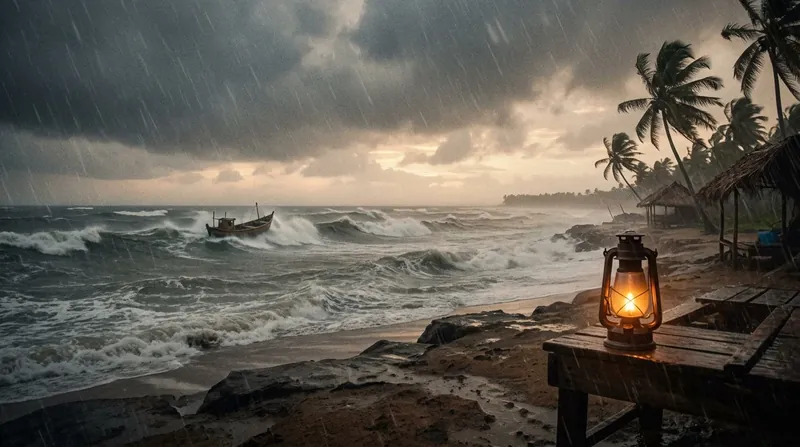
On the night of the storm she stood on the beach with her son and held a lantern out toward the water until morning. The boat never came. She took the boy home, and the next day she went to work.
The lantern Sheru talks about is the other one, at home. She sat beside it every night and washed his one patched white school shirt, scrubbing out the mud the other children had thrown so it would be white again by morning.
"Ente monte shirt ennum vellayaayirikkanam. Aarum ninne thaazhthi kaanaruthu." (My son's shirt must always be white. No one should ever look down on you.)Amma
Thirty years later he still wears only white, and why Sheru Bhai wears white tells that part in full. By the same lantern he drew with charcoal on old newspaper and fish-market wrapping paper, and she kept every one of those drawings in a tin box. When they lost the house, the tin box was one of the few things she carried out.
1999"If we cry, they win"
In 1999 Muthalali the moneylender took the house, then kicked her fish basket into the mud in front of the whole market. Her thirteen-year-old had just been knocked down and had got up again. Now he was kneeling in the mud picking up her fish with his eyes filling, and Amma knelt next to him and kept her voice level.
"Karayaruthu mone. Nammal karanjaal avar jayikkum." (Don't cry, son. If we cry, they win.)Amma, 1999
Said to a crying boy in a crowded market, it was the kindest thing she had to give him: a way to deny cruel people the pleasure of watching them break. The calm in Sheru Bhai today, the stillness that makes grown men lower their voices, goes back to her on that afternoon. The rest of that day is in Muthalali the moneylender.
2005The earrings
By 2005 they were living in a tin shed beside the railway line in Kollam, where the trains shook the walls at night, and Sheru, nineteen, was hauling nets to pay down her debts. Then an agent came with a labour visa for Dubai. It cost money they did not have.
The last thing of value Amma owned was her wedding earrings, the gold she had worn the day she married Velayudhan. She sold them and put the money in her son's hand. There was no speech, and she didn't let him argue.
"Amma didn't sell her earrings. She bought my future."Sheru Bhai
Of all the lines in Sheru Bhai quotes, that one explains the most about him. Everything he owns today was paid for, at the very start, with a pair of gold earrings from a widow's palm.
The phone calls
For eight years Sheru did not come home. He called from the Sonapur labour camp when he could, and every call ended the same way: he asked if she had eaten, and she said yes, she had eaten well.
She hadn't. Money was tight at both ends of the line and she ate last, as she always had. He was far away in the heat with enough to carry, so she told him what he needed to hear. He knew, and he kept asking anyway, because from across the sea asking was the closest he could get to feeding her. The camp years are in Sonapur and Salim.
2013Fish curry in her handbag
In 2011 Sheru opened his first business, a two-table cafeteria in Deira, and named it after her. A fire burned it in 2013 and he reopened a week later. The same year he finally brought Amma to Dubai, something he had been planning since the day at the bus stand.
It was her first flight. She had never been on a plane and did not entirely trust that there would be proper food at the other end, so she cooked a fish curry, packed it tight, wrapped it in a cloth and hid it in her handbag. The whole way across, the handbag smelled faintly of Neendakara.
That evening mother and son sat down to eat together for the first time in eight years. He watched her finish a full plate and reach for more, after all those calls where she'd said "yes, I've eaten."
"Today, Amma really ate."Sheru, 2013
2026Back through the same door
In 2026 Sheru went back to Neendakara and bought the house Muthalali had taken twenty-seven years earlier. He gave the old moneylender, by then poor and alone, the back room. When people asked why, he said, "Amma padippichathu ithaanu." This is what Amma taught me.
Then Amma came home, to the house she had left with a few pots, a sleeping mat and a tin box of drawings. At the door, in front of the village that had watched her lose everything, her son bent down and touched her feet.
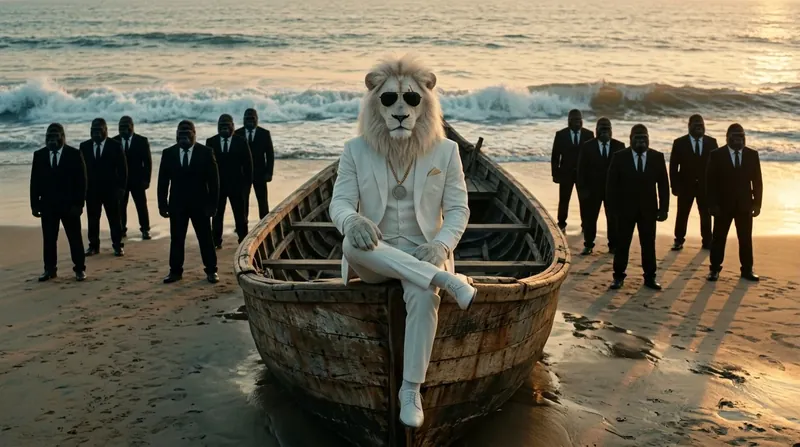
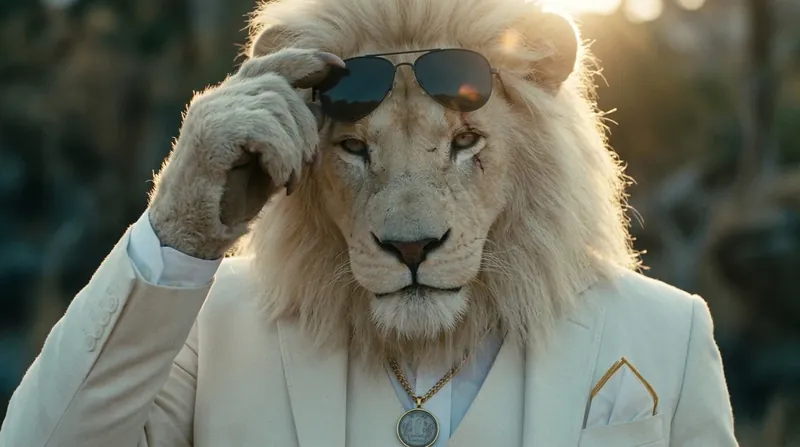
Nobody made a speech. The cars waited down the lane while a lion in a white suit bent at a doorway for the woman who had kept his shirt white years before there was any suit.
What she taught him
Take away the money and the cars and nearly everything Sheru Bhai does comes from her. He keeps his head up because she washed his shirt, and he stays calm because she told him not to cry. Watching her carry a debt for years is why he pays every one of his. When he pays a dead friend's daughter's fees and tells no one, he is helping the way she did everything, without a word. His tagline, "Money isn't king. The heart is.", is a fair summary of how she lived.
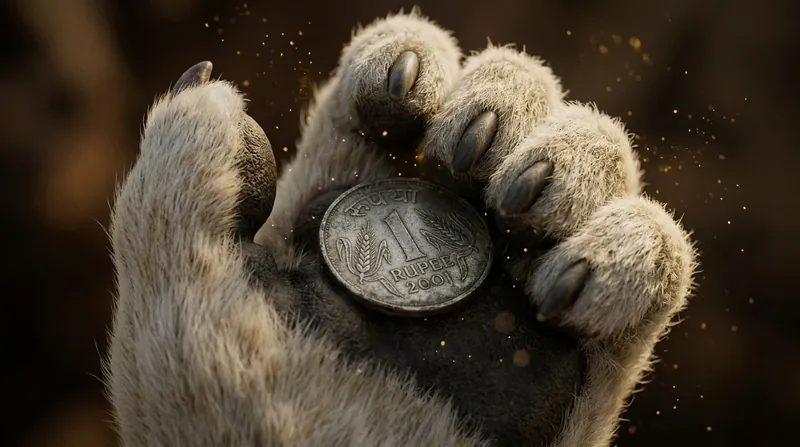
The whole life, in order, is in the Sheru Bhai story. The coin that started it is in the one-rupee coin.
Amma, Sheru and everyone in their story are fictional characters, made with AI. If she reminded you of someone in your own house, you already know who to call.
Questions people ask
Who is Sheru Bhai's mother?
Sheru Bhai's mother is called Amma. She sold fish at the Neendakara harbour after his father was lost at sea in 1994, washed his one white shirt every night, and sold her wedding earrings for his Dubai visa.
Why did Amma sell her earrings?
In 2005 an agent offered Sheru a labour visa for Dubai, and the family had no money for it. Amma sold her wedding earrings to pay. Sheru says, "Amma didn't sell her earrings. She bought my future."
What does "Karayaruthu mone" mean?
"Karayaruthu mone. Nammal karanjaal avar jayikkum." means "Don't cry, son. If we cry, they win." Amma said it in 1999 after the moneylender kicked her fish basket into the mud.
Does Amma go back to Neendakara?
Yes. In 2026 Sheru buys back the family house in Neendakara and Amma moves back in. He touches her feet at its door.
What is Amma's name in the Sheru Bhai story?
She is only ever called Amma, the Malayalam word for mother. The story never gives her another name.