Muthalali: the moneylender who took Sheru Bhai's house
He kicked a fish basket into the mud and laughed. Twenty-seven years later the house came back, and so did he.

Muthalali is the villain of the Sheru Bhai story: Raghavan, the moneylender of Neendakara, a crocodile in a white shirt and a gold chain. In 1999 he took the house Sheru grew up in and kicked Amma's fish basket into the mud. In 2026, when he is old and about to lose that same house, Sheru buys it back and gives him the back room.
If you came to this page hoping for revenge, so did the whole village in 2026. This is what they got.
A crocodile in a white shirt
In Malayalam, muthalali means owner or boss, the man with the money, and in Neendakara everyone knew which man it meant. Raghavan dressed for the part: a crisp white shirt, a thick gold chain, and a smile that showed slightly too many teeth. He sat near the edge of the market and lent to fishermen when the catch was poor, and the interest did the rest.
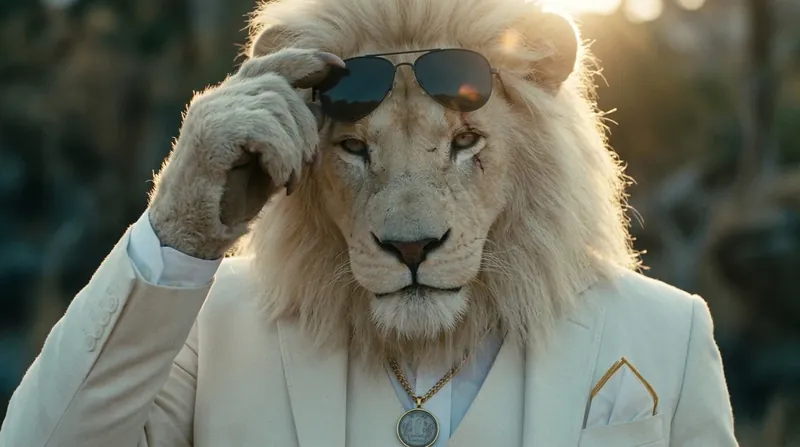
The white shirt and the gold chain are very close to what Sheru wears today. Two men from the same small village ended up in the same colours. Muthalali wore them to stand over people. Sheru wears them because his mother scrubbed a shirt every night so that nobody could stand over him, which is the subject of why Sheru Bhai wears white.
The loan
Sheru's father, Velayudhan, borrowed from Muthalali for the one old wooden boat the family lived on. In 1994 a storm took Velayudhan and the boat together. The loan stayed behind.
Amma paid what she could from the fish she sold at the harbour, and it was never enough to touch the interest, which grew every month whether the sea gave fish or not. Her son watched the number on Muthalali's paper climb year after year while his mother's back bent a little more over her basket. He saw interest take his home, and these days he pays every debt the moment he can.
1999The house
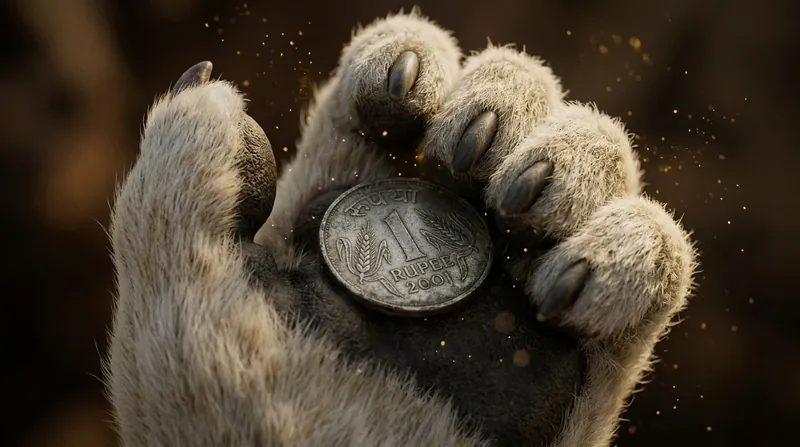
In 1999 Muthalali took the house. Amma and her thirteen-year-old son left with what they could carry: a few pots, a sleeping mat, a tin box full of the boy's charcoal drawings, and the one-rupee coin the boy had never spent, tucked in a small pocket. You can read about that coin in the one-rupee coin.
The basket in the mud
Taking the house was not enough for him. Soon after, in the middle of the crowded fish market with half of Neendakara watching, Muthalali walked up to Amma's spot and kicked her basket over. The fish went into the mud, and he laughed.
The goat who has sold fish beside Amma's spot for thirty years still tells this part, and she tells it the same way every time, which for her is rare. The market went quiet, she says. Then the boy moved.
Thirteen-year-old Sheru stepped between his mother and Muthalali's goons. He didn't shout. He just stood there, thin and small in his patched white shirt, until one of the goons shoved him down into the mud with the fish, and he got up again.
It was the first time Neendakara saw Sheru stand, and nobody who was there has forgotten it. He didn't throw a punch. He stood until they stopped finding it funny. Then he knelt, picked his mother's fish out of the mud one by one, and put them back in the basket.
His eyes were wet. Amma bent down beside him and said:
"Karayaruthu mone. Nammal karanjaal avar jayikkum." (Don't cry, son. If we cry, they win.)Amma, 1999
He didn't cry. The line people now quote under Sheru Bhai videos goes back to that afternoon in the mud.
"Sheru never forgets a debt."Sheru Bhai
Twenty-seven years
What came between is its own long story: the tin shed by the railway line in Kollam, hauling nets at seventeen, Amma's earrings sold for a Dubai visa, the Sonapur labour camp, the cafeteria in Deira, the fire, and a business that grew into the Sheru Bhai group. It is all in the full Sheru Bhai story, and year by year in the Sheru Bhai timeline.
Muthalali's years went the other way. Nobody in the story tells his side in detail, but by 2026 his son had left him, the money was gone, and the bank was about to take the house he had once taken from a widow and a boy.
2026"Who are you?"
Sheru came home to Neendakara in a line of white cars, on the same day he knelt in the market mud for a boy named Appu. Word moves fast in a fishing village. By evening everyone knew a lion in a white suit had come back, and they were all asking who he was.
The two of them met at the house. Muthalali was small now, his shirt gone yellow at the collar. He looked up at the lion in the white suit and did not know him.
"Who are you?"
"Velayudhan's son."
The whole village was waiting. Plenty of them had stood in that market in 1999 and remembered what was done there, and now the boy was back with more money than Muthalali had ever lent in his life. They expected the old man to be put out on the road the way Amma had been. Some of them, if they are honest, wanted it.
The back room
Sheru bought the house back from the bank and gave Muthalali the back room.
He made no speech in front of the crowd and set no conditions. The old man had a room again, under the roof he had once taken. When he asked why, Sheru answered in one line.
"Amma padippichathu ithaanu." (This is what Amma taught me.)Sheru, 2026
Then Amma moved back into the house she had been forced out of twenty-seven years earlier, and at its door, in front of the village, her son bent down and touched her feet.
Why mercy is the settlement
"Sheru never forgets a debt" sounds like a threat, and for twenty-seven years Neendakara assumed it was one. The back room shows what he means by it. He settles every cruelty, every single one, and he never does it with cruelty. Throwing Muthalali onto the road would have made Sheru one more man in white and gold standing over someone weaker. Giving him a room was harder and kinder, and it settled what the village had wondered for years: what that boy in the mud would grow up to be.
Nowhere in the story is his tagline plainer: "Money isn't king. The heart is." Panam alla, manassaanu raajaavu.
One loose thread
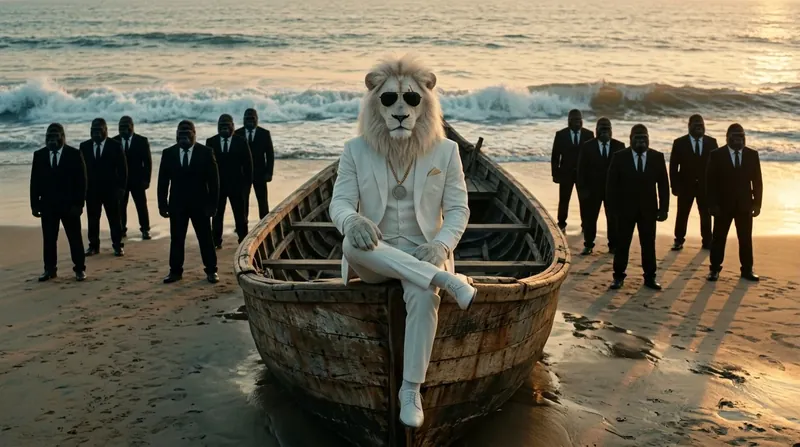
The story of that house may not be finished. On the beach at the end of the first season, an old fisherman watches Sheru and whispers: "Velayudhan's boat didn't sink because of the storm..." What he means is for Season 2. Until then, the woman who held the family together has her own page, Sheru and Amma, and the rest of the cast is in the Sheru Bhai characters.
Muthalali, Sheru, Amma and the people of Neendakara in this story are fictional characters, made with AI.
Questions people ask
Who is Muthalali in Sheru Bhai?
Muthalali is Raghavan, the moneylender of Neendakara and the villain of the Sheru Bhai story. He is a crocodile in a white shirt and gold chain who took Sheru's family home in 1999.
What did Muthalali do to Sheru Bhai's family?
After Sheru's father was lost at sea, the boat loan grew with interest until Muthalali took the house in 1999. He then kicked Amma's fish basket into the mud at the market and laughed.
What happens to Muthalali at the end?
In 2026, old and abandoned by his son, Muthalali is losing the same house to the bank. Sheru buys it back and gives him the back room, saying "Amma padippichathu ithaanu" (This is what Amma taught me).
Why didn't Sheru Bhai take revenge on Muthalali?
Sheru settles every cruelty but never with cruelty. Giving Muthalali a room under the roof he once took was how Sheru settled that debt, the way Amma taught him.
What does Muthalali mean?
In Malayalam, muthalali means owner or boss, the man with the money. In the Sheru Bhai story it is what Neendakara calls Raghavan, the village moneylender.