The one-rupee coin: why a billionaire wears his father's rupee
Achan promised sweets when he came home. The boy is forty now, and the coin is still unspent.
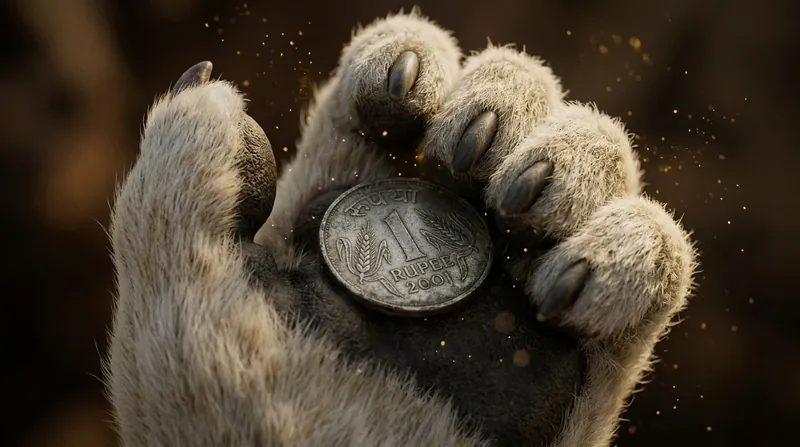
The coin on Sheru Bhai's gold chain is an old one-rupee coin his father gave him in 1994, on the morning the sea took him. Sheru never spent it, and today, at forty and a billionaire, he wears it in a thin gold bezel against his white suit.
It is the cheapest thing he owns, and the only thing he has ever said he would never sell, spend or give away. Much of what the lion in the white suit does later makes more sense once you know where this rupee came from.
1994A grey morning in Neendakara
Velayudhan was a fisherman. He had one old wooden boat, a wife, a small son, and a loan from the village moneylender that never seemed to shrink however hard he worked. In the Sheru Bhai story he is Achan, the Malayalam word for father, because that is still what his son calls him.
The morning he went out for the last time was a monsoon morning, the sky low and the colour of wet ash. Before he pushed the boat into the water he crouched in front of his eight-year-old and pressed a coin into his paw.
"Ithu vecho mone... Achan varumbo namukku mittaayi vaangaam." (Keep this, son. When Achan comes back, we'll buy sweets.)Achan, 1994
One rupee now, sweets later. Fathers say things like that on ordinary mornings without thinking twice, and usually nobody remembers them. This boy has remembered it for thirty-two years.
The lantern on the shore
The storm came that night. Amma took her son down to the beach with a lantern, and they stood there with the wind pulling at the flame and the rain coming sideways off the sea, watching the dark water until the sky turned from black to grey. Some boats came in. Velayudhan's never did.
The boy held the coin in his fist all night. By morning his paw was stiff around it, and he had to open his fingers one at a time.
Why he never spent it
The years after the storm were thin ones. Amma sold fish at the harbour, there was one white school shirt, and often there was not enough rice. In that house a rupee was real money. It could have bought a cup of tea, or a twist of sweets from the shop near the market, or one evening of a little less hunger.
He never spent it, and if you ask him why, the answer never changes.
"I'm still waiting for Achan."Sheru, on the coin
It is a child's logic, and an exact one. The coin was for sweets when Achan came home, so spending it on anything else would mean admitting he wasn't coming. As long as it stayed in the boy's pocket, the promise was still open.
He kept it the year the moneylender took the house, and in the tin shed beside the railway line in Kollam, where the trains shook the walls at night. He kept it through the years of hauling nets for other men's boats. When Amma sold her wedding earrings to pay for his Dubai visa in 2005, the coin went with him in his pocket. In the Sonapur labour camp the sponsor locked his passport away. Nobody thought to take a rupee.
Plenty of people hold on to something like this, a watch that stopped or a letter or a ring that no longer fits. Sheru held on to a coin through years when one rupee meant something to him, and he still left it alone.
Silver-grey, set in gold
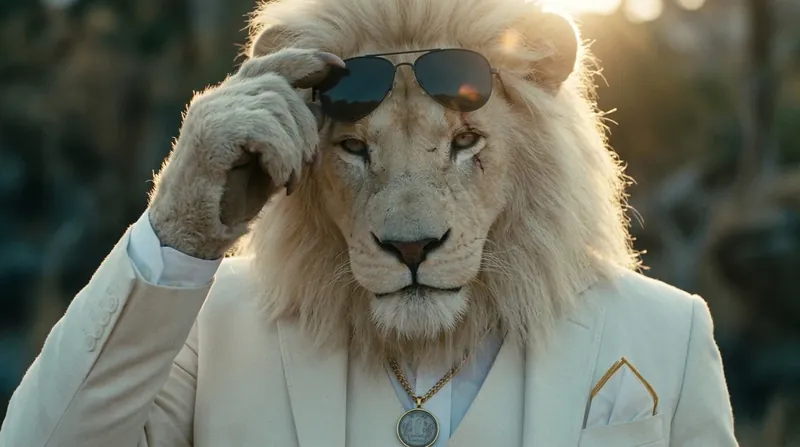
Today the coin is worn to a soft silver-grey, its edges rubbed smooth by thirty years of thumbs. It sits in a thin gold bezel on a gold chain, worn over a white three-piece suit by a lion whose kitchens feed thousands of workers every day.
People see the worn rupee against the gold and assume it is a style choice. It does look good, but he has never cared about that. The bezel is there so the coin can't be lost, and the chain so it can't be spent. It is also the first and simplest of his habits, the ones fans now collect as Sheru Bhai's money rules: the coin is the one thing he will never spend.
The rest of his habits with money follow from it. A man who could not bring himself to spend one rupee for thirty years writes every dirham in a notebook, walks when he can walk, and sends Amma her share before he buys himself a meal. Since that monsoon morning, money has always come to him with a promise attached.
These are a fictional character's habits from a story, not financial advice.
The one debt he can't collect
Sheru's catchphrase is "Sheru never forgets a debt," Sheru kanakku marakkilla, and most of his story shows him paying debts back: the lunch Ammu shared with him at school, the bread Salim shared in the camp, small kindnesses from strangers that he repaid years later without making a fuss about it.
The coin is a debt that runs the other way, and he can never settle it. Achan still owes him sweets and is never coming back to pay, so Sheru wears the promise on his chain.
2026A new coin for Appu
When Sheru comes back to Neendakara in 2026, the first thing he does is kneel in the mud of the fish market to pick up a stranger's catch. The stranger is Appu, a ten-year-old otter selling fish alone because his own father, a fisherman, is in hospital after an accident at sea. Looking at the boy, Sheru sees a monsoon morning in 1994.
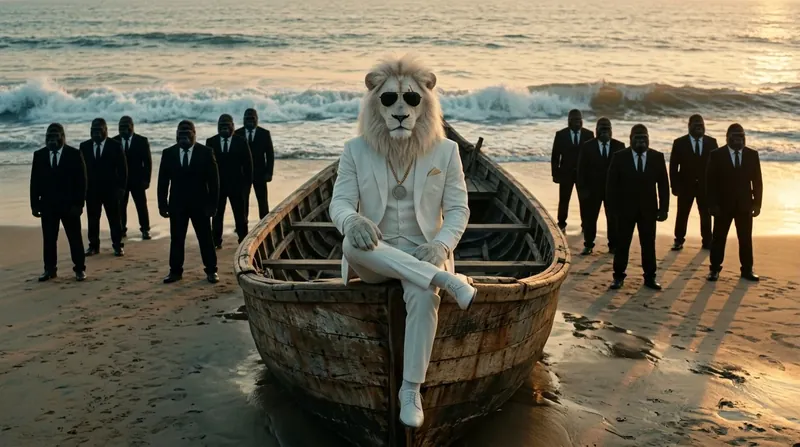
Later, on an old wooden boat pulled up on the beach with the sun going down into the water, he tells Appu everything: the storm, the shirt, the moneylender, the camp, the fire. At the end he takes out a new one-rupee coin, bright and plain, and presses it into Appu's paw the way his father once pressed one into his.
"Ini ninte kadha." (Now it's your story.)Sheru, 2026
He keeps his own coin. That one stays on the chain, still waiting for Achan. The new one is for Appu to start out with, and whatever comes after is his to make. The last thing we see is that coin held up to the rising sun.
Then an old fisherman on the beach, who has been watching all along, says under his breath: "Velayudhan's boat didn't sink because of the storm..." That is where Season 2 begins.
What one rupee means now
Sheru's story starts with a single rupee and a father who meant to come home, long before there is any money in it. Read the Sheru Bhai story and you can trace his calm, and his habit of paying back every kindness, to that morning on the shore. The white suit comes from somewhere else: Amma, and a shirt she washed every night. If you want the man first and the details later, who is Sheru Bhai is the short version. Sheru and Amma is about the woman who stood on the shore holding the lantern, and the lines people repeat most are in Sheru Bhai quotes.
Sheru, Achan, Amma, Appu and everyone in this story are fictional characters, made with AI. The coin is a different matter. Plenty of real families have one just like it, kept in a drawer, waiting for someone.
Questions people ask
What is the coin on Sheru Bhai's chain?
It is an old one-rupee coin his father, Velayudhan, gave him in 1994 on the morning he went to sea and never came back. Sheru wears it in a thin gold bezel on his gold chain.
Why did Sheru Bhai never spend the one rupee?
His father said they would buy sweets with it when he came home. Spending it would mean admitting Achan was never coming back, so Sheru kept it. He says, "I'm still waiting for Achan."
What did Sheru's father say when he gave him the coin?
"Ithu vecho mone... Achan varumbo namukku mittaayi vaangaam." It means: Keep this, son. When Achan comes back, we'll buy sweets.
Who does Sheru Bhai give a coin to in the finale?
He gives a new one-rupee coin to Appu, a ten-year-old otter who sells fish at Neendakara market, and tells him "Ini ninte kadha" (Now it's your story). He keeps his father's coin on his chain.
Is the Sheru Bhai one rupee story true?
No. Sheru Bhai and his family are fictional characters made with AI. The story is set in the real fishing village of Neendakara in Kollam, Kerala.