Why Sheru Bhai wears white: the shirt Amma washed every night
Long before the suit there was one school shirt, washed by hand and by lantern light every night for years.
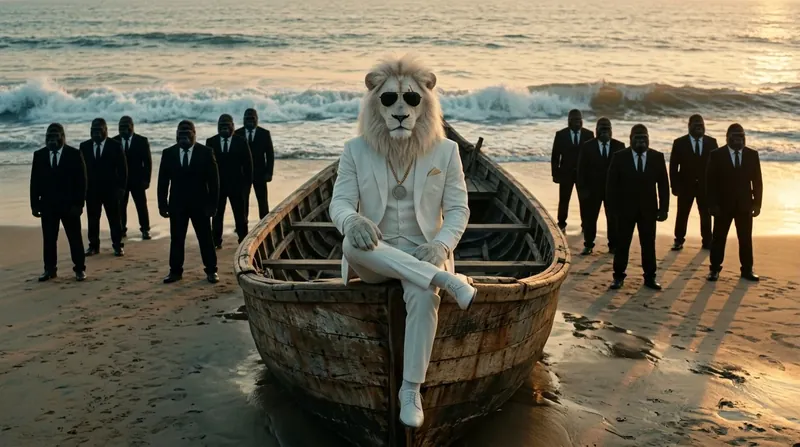
Sheru Bhai wears white because of his mother. As a boy in Neendakara he owned one patched white school shirt, and every night Amma washed the mud out of it by lantern light so no one would ever look down on him. He has worn white ever since, and the suit he wears today keeps her promise.
He has a line for it, and he says it the way other people say their own name: "This isn't a suit. It's Amma's word."
1994One shirt
After Achan was lost at sea in 1994, the little house in Neendakara ran on whatever Amma could sell at the harbour market by noon. She was up before light sorting the catch, and home after dark with her basket empty and her hands smelling of salt. Most days there was money for rice. There was never money for clothes.
Sheru had one school shirt. It was white, patched at the elbow and again at the collar, where Amma had turned it to get another year out of the cotton. He wore it six days a week. On the seventh it hung on the line.
The mud
The boys at school worked out fast that the fish seller's son had only one shirt, and that a handful of wet mud from the roadside would stay on it all day. So they threw it. Some days it happened on the way to school and some days on the way home, which was worse in its own way, because then Amma would see.
He didn't fight them. He was small then, and quiet, and he had already learned that a boy with no father and a mother working the harbour has very little to spare for fights. He walked into class with the mud drying on his chest, sat down, and kept his head up.
The lantern
Every night, after the fish and the cooking and the counting of coins, Amma sat beside the lantern with a bucket of water and a bar of washing soap and scrubbed that shirt, working the mud out of the cotton with her thumbs. On the nights the boys had thrown mud she scrubbed it hard. On the nights they hadn't, she washed it anyway.
"Ente monte shirt ennum vellayaayirikkanam. Aarum ninne thaazhthi kaanaruthu." (My son's shirt must always be white. No one should ever look down on you.)Amma, Neendakara
She hung it near the cooking fire to dry. In the monsoon it was often still damp in the morning, and he put it on damp. By the time he reached school it was dry and white, and the boys could start all over again.
She did this after a whole day of calling out prices at the harbour, with almost nothing to her name, so that nobody could tell her son he was less. She had no way to stop the boys and their mud, so every night she got it out again.
Head up
He took her at her word. The boys would throw what they liked, but whether the mud was still on him the next morning, and whether he walked in with his head down, was up to him and Amma. For years he wore that shirt to school, muddy on the bad afternoons and clean every morning because Amma had sat up for it.
In the same years, at the same lantern, he started drawing with charcoal from the kitchen fire on old newspaper and the backs of fish-market wrapping paper. He drew boats and the sea, and Achan's face so he would not forget it. The first lion he ever drew was himself, standing tall. Amma kept every one of those drawings in a tin box. Decades later that boy's lion became the brand mark of the whole Sheru Bhai group, which you can read about in Sheru Bhai the artist.
From one shirt to the white suit
The white three-piece suit came much later, after the railway shed and the nets, the Sonapur labour camp, the two-table cafeteria in Deira and the fire that burned it. One of Sheru's habits is that he spent on skills before status, and the second-hand laptop came years before the tailor. When he finally had a suit made, it was always going to be white.
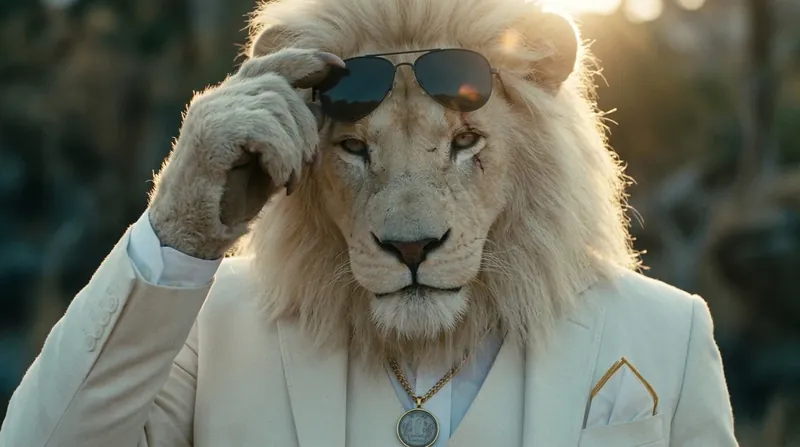
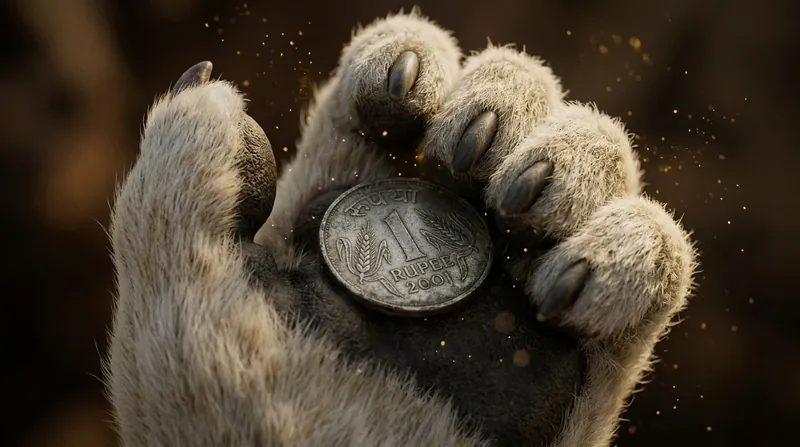
The old shirt still shows in the details. The pocket square is kasavu, the gold-bordered cotton every Kerala household knows, the kind of cloth a mother keeps folded for her best days. The coin on his chain is his father's, from the one-rupee coin story. The suit is pressed and spotless every morning, so somebody is still making sure the white stays white.
"This isn't a suit. It's Amma's word."Sheru Bhai
Why he still kneels in the mud
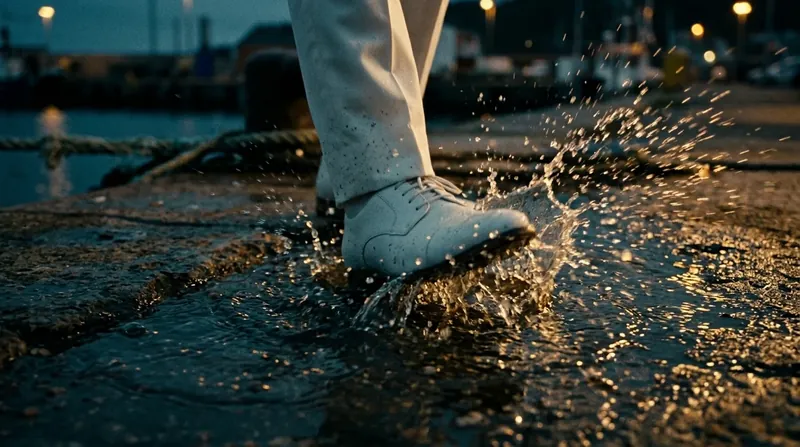
In the first episode, set in the present day, goons kick a boy's fish basket into the mud at Neendakara market and slap him. A line of white cars cuts through the crowd and Sheru steps out in the white suit. Most viewers expect him to keep it clean. Instead the first thing he does is kneel down in that mud and pick up the boy's fish, one by one.
The suit gets filthy and he doesn't look at it once. All Amma ever asked was that he come out of the mud with his head up. He also knows exactly how mud comes out of white cotton, because the woman who raised him did it every night.
Power in Sheru's world always ends in kindness, and the white suit is never used to make anyone feel small. He wears white so that nobody looks down on him, and that rules out using it to look down on anyone else.
The shirt in the full story
That shirt turns up all through the Sheru Bhai story, from the harbour to Dubai and back again. To meet the woman who held the soap, read Sheru and Amma. For the short version of his whole life, start with who is Sheru Bhai.
Sheru, Amma and everyone in these stories are fictional characters made with AI. The lantern, the bucket and the mother sitting up late with someone else's shirt in her hands will be familiar to a great many real homes.
Questions people ask
Why does Sheru Bhai only wear white?
Because of his mother. As a boy he had one patched white school shirt that other children threw mud on, and Amma washed it by lantern every night so no one would look down on him. His white suit carries that promise.
What does "This isn't a suit. It's Amma's word" mean?
It is Sheru Bhai's line about his white suit. He wears white to keep his mother's promise that no one would ever look down on her son.
What did Amma say when she washed Sheru's shirt?
"Ente monte shirt ennum vellayaayirikkanam. Aarum ninne thaazhthi kaanaruthu." It means: My son's shirt must always be white. No one should ever look down on you.
What is Sheru Bhai's pocket square?
It is a kasavu pocket square, the gold-bordered cotton of Kerala. He wears it with a white three-piece suit, black aviators and a gold chain holding his father's one-rupee coin.