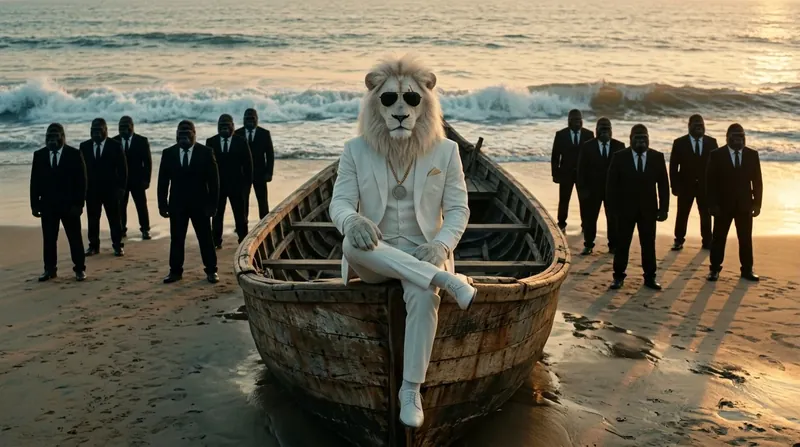
How Sheru Bhai built a billion-dirham empire with food, technology and AI
Two tables, one fire, a second-hand laptop and a promise that no worker would go hungry the way he did.
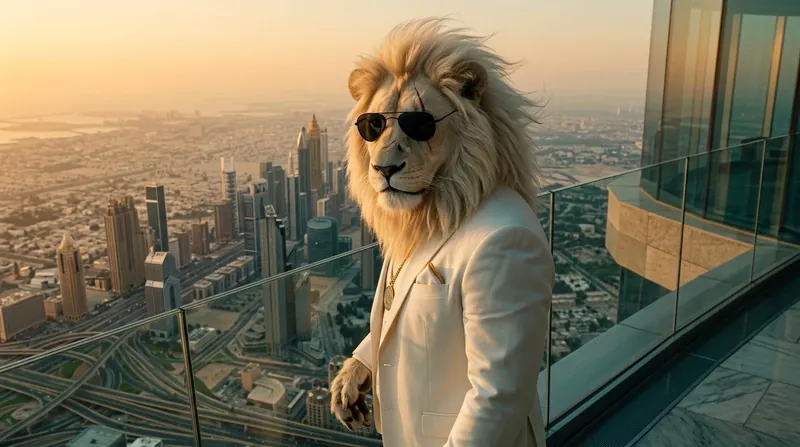
Sheru Bhai built his billion-dirham empire one plate at a time. He saved 9,000 dirhams over six years as a labourer in Dubai, opened a two-table cafeteria in Deira in 2011, survived a fire, and grew into feeding the labour camps he once lived in. Then he taught himself technology at night, built a meal-ordering app in 2015 and AI kitchens in 2019, and named the whole group after the name the camp gave him.
Behind each of those steps is a man who remembered exactly what hunger felt like and kept building so that other men would feel it less.
2005The 9,000 dirhams
Sheru arrived in Dubai in 2005 at 19, on a labour visa Amma paid for by selling her wedding earrings. He was sent to the Sonapur labour camp, where twelve men slept to a room, the site hit 48°C and his passport sat locked in the sponsor's office. That part of his life is in Sonapur and Salim.
Getting rich was nowhere in his head. He had a debt to clear and a mother to send money to, and he kept a small notebook. Every salary was split the same way: first to Amma, then to the debt, then a fixed part he never touched, and he lived on whatever was left. He walked instead of taking the bus. Every dirham went into the notebook, the money from the site and the coins men paid him for portraits drawn on the backs of cement bags.
Six years of that came to 9,000 dirhams. For a man who had eaten Salim-ikka's last khubus in a hot room, it was a small fortune, and it was every coin he had.
"The bread I ate that night was the most expensive meal of my life."Sheru, on Salim's last khubus
2011Two tables in Deira
In 2011, at 25, Sheru put all 9,000 dirhams into a cafeteria in Deira with two tables, a counter and a tea urn. He named it after Amma and painted the sign and the menu board himself.
The food was what men like him wanted after a shift: hot tea, parotta, a fish curry that tasted of home, at a price a labourer could pay without counting twice. He knew the price because he had been the man counting. He opened early for the night shift coming off and closed late for the day shift coming back.
The men came, then brought their friends, and soon there were more of them waiting than two tables could seat.
2013The fire
In 2013 a fire burned the cafeteria. Two years of work went in one night, along with the tables, the urn and the hand-painted sign. Sheru reopened one week later.
That week was hard. He cleaned the black off the walls himself, borrowed nothing he could not repay, and put up a new sign. The regulars came back on the first morning, some of them before he had the tea ready.
"The fire burned my shop. It didn't burn me."Sheru, 2013
The same year he brought Amma to Dubai on her first flight. She hid fish curry in her handbag. That story, and the line "Today, Amma really ate", is in Sheru and Amma.
Feeding the camps
One cafeteria became a few, and then Sheru took on camp catering: hot food, every day, for thousands of workers in labour camps across the city. They were the same men Sheru had been eight years earlier.
He knew what they needed because he had lived it. The food had to arrive on time, before the bus to the site, with enough rice, and it had to taste as if someone's mother had made it. Above all, it could never run out before the last man in the queue.
That last point became a rule inside the business. Sheru had watched men go to work hungry in 48°C heat, and he had carried Salim through that heat. When he fed the camps, he meant to feed them better than the camps had fed him.
A second-hand laptop after closing
Sheru left school at 17 and never studied business or computers. He had a second-hand laptop and the hours after the cafeteria shut.
Night after night, once the last table was wiped down, he sat with it and taught himself. He started by moving the accounts out of the notebook and onto a screen, then worked out how software ran and how a simple app was put together. He went slowly and he went every night, the way he had saved: a little at a time, without skipping.
Among Sheru's habits, this is one he talks about most: spend on a skill before you spend on looking good. The laptop came years before the white suit. More of his habits are in Sheru Bhai's money rules.
2015An app in four languages
By 2015 he had built a phone app so labour camps could order their meals. It was simple, and it worked in Malayalam, Hindi, Tamil and Bengali.
The languages came straight from Sonapur. In the camp, half the men in a room could not read an English menu, and nobody had ever built anything for them in their own words. With Sheru's app, a worker from Kerala and a worker from Bengal could order the same meal on the same phone, each in the language his mother spoke.
After the app, the rest of the business moved onto software too: orders, supplies, cooking times, and the routes the vans took to each camp.
2019AI kitchens
In 2019 Sheru's kitchens began using AI to predict how much food each camp would need. Every order, every shift change and every hot week taught the system a little more, and the kitchens no longer had to guess.
He wanted no food wasted and no worker hungry, and he would not give up either one to get the other. Cook too much and good food goes in the bin. Cook too little and the last man in the queue goes to the site with nothing, the way Sheru and Salim sometimes did.
Of everything in the business, this comes most directly from his past. He once ate a friend's last piece of bread, and he built a system so that no worker in his camps would have to.
Buying the company that held his passport
Years after he arrived in Dubai with his passport taken from him, Sheru bought the company that had held it.
He started with the water queue. The workers who used to line up in the heat for water now eat for free on hot days, and that was his whole settlement with the place. He gave no speech about it.
"Sheru kanakku marakkilla." (Sheru never forgets a debt.)Sheru Bhai
He repays every kindness and settles every cruelty, and he never does it with cruelty. He follows the same rule when he goes back to Neendakara in 2026 and meets Muthalali again.
The name on the door
In the camp, the men did not call him Shekharan. They called him Sheru Bhai, brother Sheru, the one who drew their faces, saved every coin and shared what he had.
When the group grew big enough to need a name, he gave it that one. Today Sheru Bhai runs on three things he learned the hard way: food, from Amma's kitchen and the camp queues; technology, from a second-hand laptop at night; and art, from charcoal on newspaper. The lion on everything the group makes is his own drawing, a story told in Sheru Bhai the artist.
Even the details trace back to someone. The suit is white because of Amma, the coin on his chain was Achan's, and the company carries the name the camp men gave him when he had nothing.
"Panam alla, manassaanu raajaavu." (Money isn't king. The heart is.)Sheru Bhai
For every year in order, see the Sheru Bhai timeline. For the whole life in one long read, start with the Sheru Bhai story.
Sheru Bhai and everyone in his story are fictional characters made with AI. This is a story about a fictional character's life, not business or financial advice.
Questions people ask
How did Sheru Bhai become a billionaire?
In the story, Sheru Bhai saved 9,000 dirhams over six years as a labourer in Dubai, opened a two-table cafeteria in Deira in 2011, grew it into camp catering for thousands of workers, then built a meal-ordering app and AI kitchens. His group, Sheru Bhai, became a billion-dirham business.
What does the Sheru Bhai company do?
The Sheru Bhai group runs on three things Sheru learned the hard way: food, technology and art. It feeds workers through cafeterias and camp catering, runs its kitchens and delivery on its own software, and has a design studio.
When did Sheru Bhai open his first cafeteria?
In 2011, in Deira, Dubai. It had two tables and he named it after his mother, Amma. A fire burned it in 2013 and he reopened it one week later.
How does Sheru Bhai use AI?
From 2019 his kitchens use AI to predict how much food each labour camp needs, so no food is wasted and no worker goes hungry.
Why is the company called Sheru Bhai?
Sheru Bhai is the name the men in the Sonapur labour camp gave him. When the group grew, he named it after the camp's name for him.